Robots Solving Labor Crisis
Read on Robots Solving the Global Labor Crisis:
Please read and write a short paragraph:
You must include one transition word:
the paragraph must mention
Here are a couple of questions that a fifth grader might ask about the article:
2. How do exoskeletons work, and how can they help workers in their jobs?
“Humanoid Robots Are Solving the Global Labor Crisis!”
“Thanks To Humanoids, Workforce Productivity Is Surging!”
Made you look.
The reality is, it will probably be years—some say even decades—before we’ll read headlines like these.
But today’s industry innovators are out to ensure that humanoid robots will ultimately make a transformative impact across companies worldwide—and sooner than we think.
In fact, one startup, Figure, believes general-purpose humanoid robots could eventually make manual labor “optional,” substantially increasing worldwide productivity and creating a future with a “significantly higher standard of living.”
An awe-inspiring vision for tomorrow, indeed. But the fact is, enterprises are looking for workplace solutions to help their human contributors work harder, faster, and healthier right now.
ROBOTIC SOLUTIONS TODAY
Many businesses are already turning to more “traditional” robotics and automation technologies—industrial and service robots working on factory floors and in other environments—to support their efforts. By speeding up processes and improving efficiencies, they’re relieving workforce pressures and even creating jobs. The World Economic Forum estimates that technologies including AI, automation, and robotics could create 12 million more jobs than they eliminate by 2025.
However, other organizations are finding it challenging to implement robotics solutions because the economics and benefits simply don’t stack up. In some manufacturing settings, for example, precision robots take time and money to design, and they need their industrial processes to run like clockwork to avoid costly production stoppages.
That’s why I believe it’s an opportune time for enterprises to try another strand of robotics innovation on for size: the exoskeleton.
EXOSKELETONS CAN HELP WORKERS DO MORE, SAFELY
Exoskeletons are wearable robotic devices that quite literally can support workers and businesses in ways that traditional robotic technologies can’t.
Long hailed as a transformative medical technology for individuals with physical mobility disorders, exoskeletons have been largely overlooked as a business solution for tackling labor shortages and boosting productivity—particularly in roles involving highly physical and repetitive work.
Workers can wear different exoskeleton models on a specific joint, such as the wrist or knee; on different parts of the body, such as the upper torso; or as a whole-body suit. They can be powered (active) or non-powered (passive) models, and even incorporate features like machine learning algorithms that allow their design features to adapt to a user’s unique movements.
Whatever forms they take, exoskeleton devices are designed to work with the wearer’s body to augment their capacity to carry heavy loads, reducing discomfort and fatigue that physically demanding, repetitive tasks can cause.
More importantly, they can also help protect workers from debilitating muscular stress, injuries, and long-term health problems, including work-related musculoskeletal disorders (WMSD).
This critical capability represents a massive potential benefit for enterprises, considering the crippling impact WMSD-related injuries have long had on workers and businesses worldwide. Consider these sobering statistics:
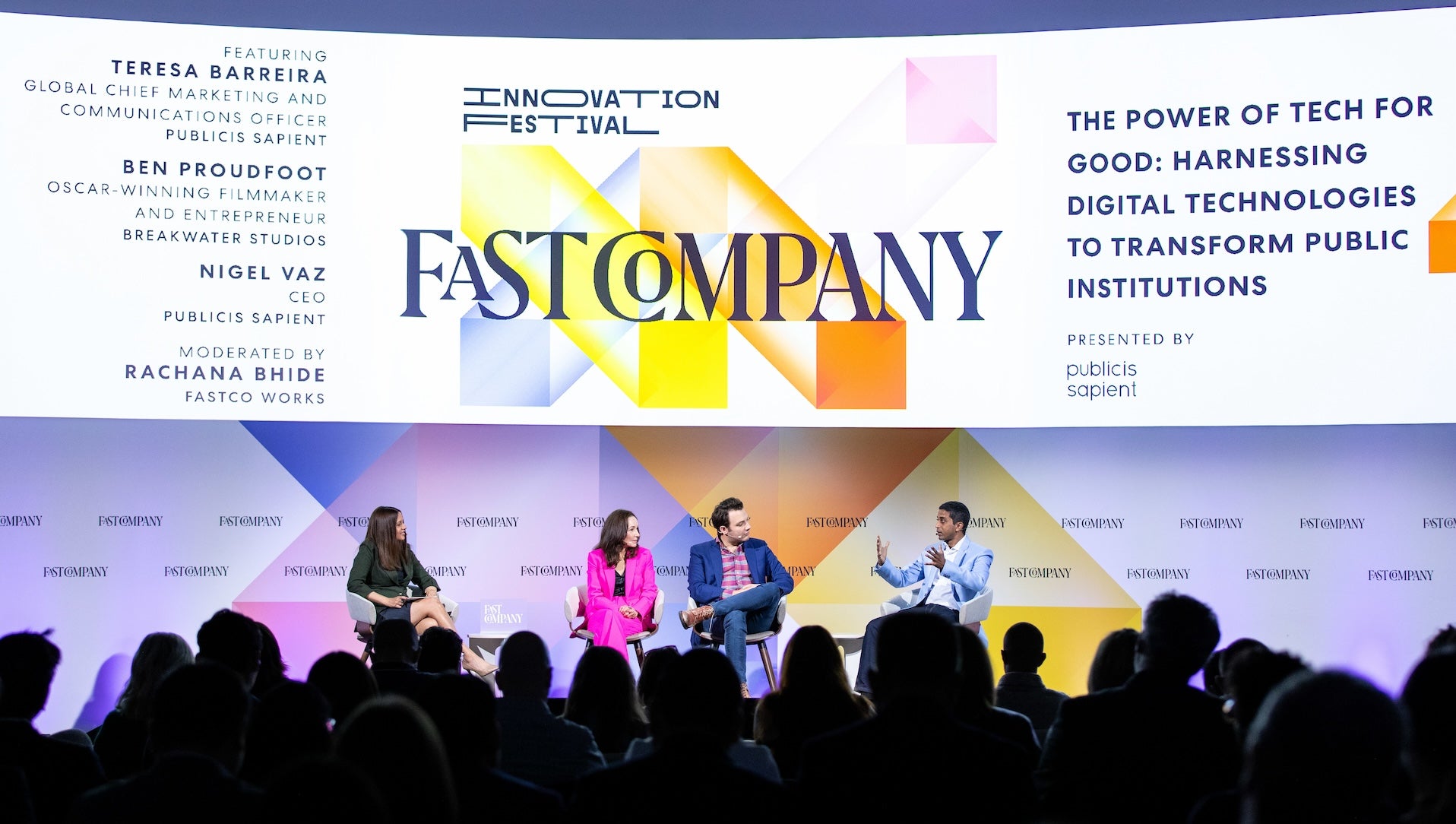
Innovative uses of new technologies are transforming public institutions
In 2019, the U.S. Bureau of Labor Statistics reported that WMSDs in the U.S. accounted for nearly 28% of all days off work among private sector workers with workplace injury or illness—far more than any other cause.
GAME-CHANGING INNOVATION HARD AT WORK
The EY Global Innovation teams recently tested a range of exoskeletons designed for workplace applications. We experienced first-hand how different exoskeleton models could help workers with repetitive heavy lifting—and how they’d need time to adapt their bodies to use them.
EY teams tested one active-type exoskeleton designed to protect a user’s back while completing tasks like picking up and putting down heavy objects. It can provide the user with up to 66 pounds of support while lifting and walking. That means a worker wearing an exoskeleton and carrying a 99-pound box will feel as though the item only weighs 33 pounds.
In recent years, extensive lab research by product developers and field tests among major global employers have shown how exoskeletons can mitigate some of the causes and effects of WMSDs. Car manufacturers have been among those testing exoskeletons as a solution for manual assembly tasks that are fast-paced, precise, and physically taxing.
But continuedreal-world testing and product innovations will be paramount to ensuring that exoskeletons are safe for widespread adoption. Without these sustained efforts, product innovators will not have the critical data and analysis needed to create exoskeletons that can truly change workers’ lives and impact employers’ bottom lines.
WILL EXOSKELETONS BECOME READY-TO-WEAR SOLUTIONS?
Even with the wealth of research and testing performed to date, exoskeletons haven’t yet achieved the broad acceptance needed to become workplace fixtures. Many industry studies, for one thing, are still uncovering exoskeletons’ potential risks as well as their benefits.
Based on our own testing, I believe exoskeleton technology is reaching a thrilling inflection point, and I’m incredibly confident about its potential future in the workplace. However, more employers are now needed to actively explore how exoskeletons can impact the well-being of their employees and their enterprises.
Finally, it is important to remember that exoskeletons aren’t about turning workers into superhumans. Their greatest benefit is the critical ergonomic support they provide, which can reduce the long-term harm and injuries workers suffer from frequent, repetitive physical work. Those capabilities could ultimately prove to be game-changing for employees and businesses.
It may still be a while before we meet our humanoid counterparts at the company water cooler. In the meantime, exoskeletons can provide workers with the added strength and support they need to protect them from injury, make their jobs easier and safer, and provide the productivity boost businesses are seeking worldwide.

I could see myself using Blogger in my classroom in the future. I would definitely have to get more comfortable using it, but it seems like a great app for students to write, comment, and communicate with each other.
ReplyDelete